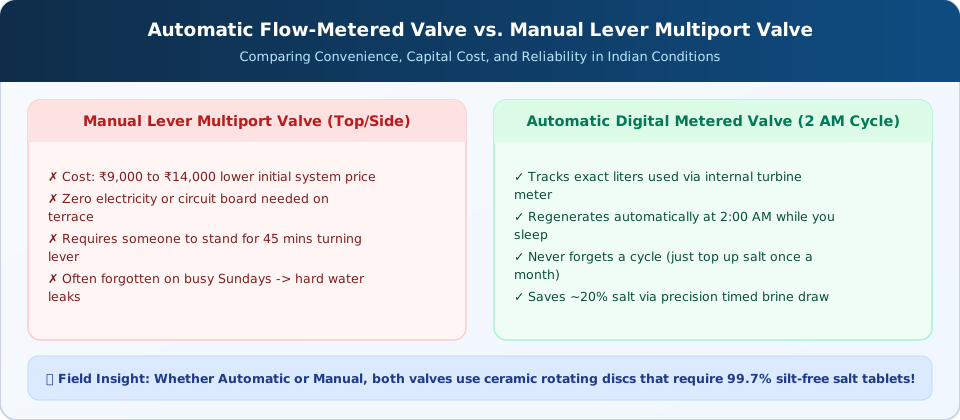
"Here is the honest pattern we see across 500+ homes in Jaipur: when a homeowner buys a manual softener, they enthusiastically climb up to the terrace every Sunday morning for the first three months. Then June 45°C summer heat arrives—or they travel for Diwali—and nobody wants to stand on the roof for 45 minutes turning the handle from Backwash to Brine Draw to Rinse. If you don't have a full-time domestic gardener or watchman, an Automatic Metered Valve pays for itself in peace of mind."
What Does a Multiport Valve Actually Do?
Sitting right on top of your water softener's blue or grey FRP cylinder is the brain of the system: the Multiport Control Valve. During normal days, it keeps the internal water path in "Service" mode. When the resin beads fill up with calcium, the valve must route water through four precise steps: 1. Backwash (10 mins) → 2. Brine Draw & Slow Rinse (30 mins) → 3. Fast Rinse (10 mins) → 4. Brine Tank Refill (5 mins).
The only difference between an Automatic and a Manual water softener is who turns that dial: a built-in digital motor at 2:00 AM, or your own hand on Sunday morning.
Head-to-Head Comparison: Manual vs. Time-Based Auto vs. Flow-Metered Auto
| Comparison Factor | Manual Lever Valve | Auto Metered Valve (Demand-Based) |
|---|---|---|
| Upfront Price Difference | Most Affordable (Base Cost) | Adds ~₹9,500 to ₹15,000 to plant cost |
| Human Effort Required | 45–60 mins weekly manual valve switching | Zero (Only add salt bags once a month) |
| What If You Go on Vacation? | Sits idle until you manually turn it | Flow-meter pauses countdown when no water is used! |
| Terrace Weather Protection | Rugged mechanical handle; weather-tolerant | Requires a weather-proof FRP/metal shed over the display |
| Best Suited For | Societies/factories with dedicated operator staff | Busy homeowners, villas, boutique hotels & clinics |
Why Both Valves Demand 99.7% Silt-Free Salt Tablets
Modern multiport valves (like Runxin, Initiative, Pentair Fleck, and Clack) seal high-pressure water ports using two mirror-polished alumina ceramic discs sliding against each other. If you use unrefined rock salt containing sand grit, a single grain of silica sucked up during brine draw can score a groove across that ceramic disc—causing continuous drain leakage. Always use 99.7% pure compacted salt tablets to keep both manual and automatic valves leak-free for 10+ years.