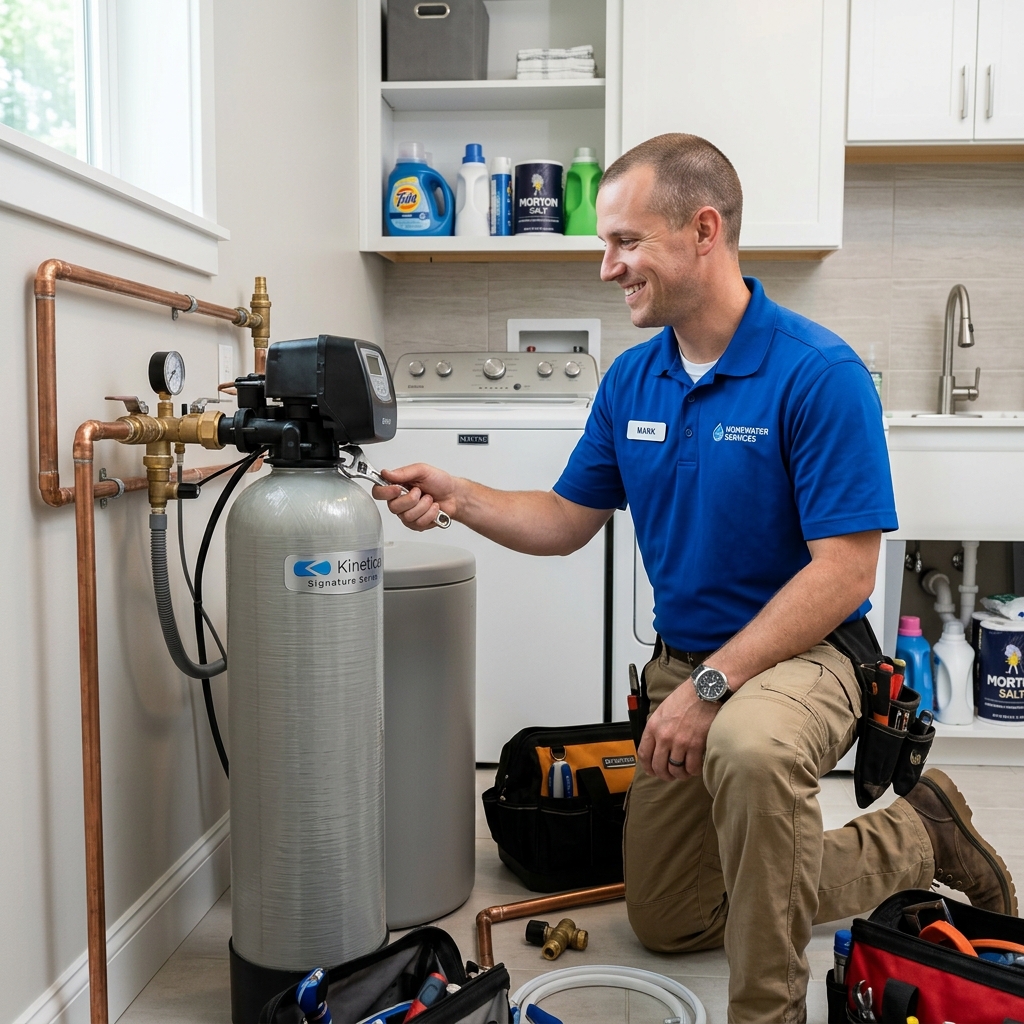
Why Routine Maintenance is Crucial
A water softener is an investment that protects your entire home—your plumbing, expensive geysers, washing machines, and your skin and hair. However, like any filtration system, it requires routine care. Neglecting maintenance lead to hardness breakthrough, loss of water pressure, and permanent damage to the expensive ion exchange resin inside the cylinder.
Whether you run a premium automatic unit like the 3M SFT-100 or SFT-200, an Ion Exchange Zero B Auto Softener, an Aquaguard domestic system, or a manual multi-port valve plant, the maintenance principles remain identical.
How to Clean Water Softener Resin Beads
Groundwater in regions like Jaipur, Jodhpur, and Ajmer doesn't just contain calcium and magnesium; it also contains trace iron, manganese, and silt. While regeneration salt removes hardness minerals, it cannot flush out iron deposits or organic slime. Over time, these impurities coat (foul) the resin beads, decreasing their capacity to exchange ions.
If your water softener is consuming salt but the output water still feels hard or has a metallic taste, your resin is likely fouled. Here is how to clean it:
- Purchase a Resin Restorer: Buy a food-grade liquid resin cleaner (such as phosphoric acid-based restorers).
- Pour into Brine Well: Pour the recommended dosage (usually 120ml to 240ml for residential systems) directly into the brine well located inside your salt tank. If there is no brine well, pour it directly into the tank when the salt level is low.
- Manually Regenerate: Trigger a manual regeneration cycle immediately. The system will draw the cleaner along with the brine, scrubbing iron and metal contaminants off the resin.
- Post-Regeneration Flush: Run a tap for 5-10 minutes after the cycle completes to ensure any residual chemical cleaner is fully rinsed out of the system.
System Troubleshooting Matrix
Use this diagnostic table to identify and resolve common water softener performance issues before calling a technician:
| Symptom | Possible Root Cause | Recommended Action |
|---|---|---|
| Water stays hard | 1. Salt bridge in tank 2. Out of salt 3. Bypass valve is open |
1. Carefully break the salt crust with a broom handle. 2. Fill with 99.7% pure compacted tablets. 3. Close bypass valve. |
| Water level in salt tank too high | 1. Clogged drain hose 2. Blocked brine injector/venturi nozzle |
1. Straighten any kinks in the drain hose. 2. Unscrew and clean the small plastic injector nozzle located on the control valve. |
| Low water pressure in house | 1. Silt/sand clogging resin tank 2. Resin breakdown due to chlorine exposure |
1. Perform an extended backwash cycle to flush silt. 2. If resin beads are leaking into taps, the internal resin screen is broken; call +91-7014349033 for replacement. |
| Salty water at tap | 1. Interrupted rinse cycle 2. Low domestic feed pressure during cycle |
1. Manually trigger a 'Fast Rinse' cycle for 10-15 minutes. 2. Ensure booster pump is active during regeneration. |
| Salty sludge at bottom | Salt mushing from cheap, loose crystal salt | Scoop out the sludge, rinse the brine tank with warm water, and replace with high-density compacted salt tablets. |
🛡️ Preventative Maintenance is Key
90% of water softener service calls are caused by salt mushing or clogged valves due to unrefined salt. By choosing our Gujarat factory direct 99.7% pure compacted tablets, you keep your system cleaner, avoid salt bridging, and protect your warranty at a very cheap price.
Request Maintenance / Repair
Experiencing hard water or low pressure? Book a professional technician service in Jaipur via WhatsApp.