"Last month, a dermatologist's patient from Nirman Nagar called us to test her home tap water. She had spent nearly ₹6,500 on imported scalp serums and medicated shampoos. When we ran an EDTA titration test on her bathroom tap, the hardness hit 740 PPM. Every time she washed her hair, calcium ions reacted with her shampoo to bake a chalky layer right onto her scalp."
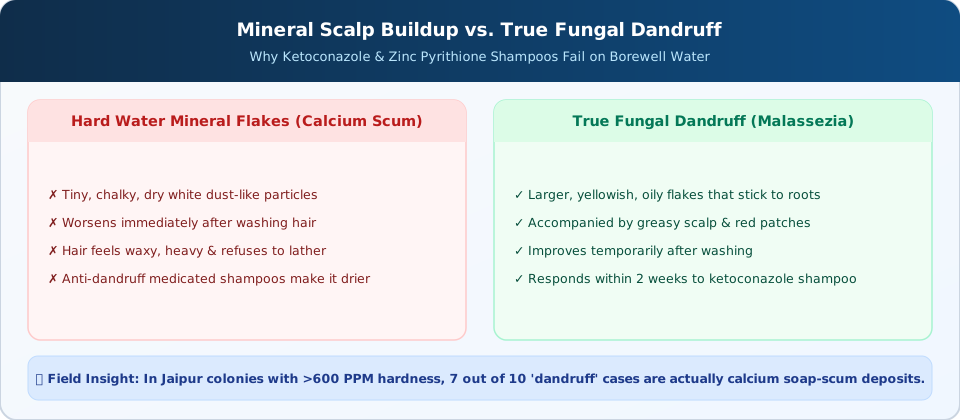
Why Medicated Shampoos Stop Working in Hard Water Areas
If you live in Jaipur—especially in borewell-dependent pockets like Jagatpura, Mansarovar, or Vaishali Nagar—you have probably stood in front of the bathroom mirror wondering why your dandruff gets worse right after a hair wash. You switch from Head & Shoulders to pharmacy-grade ketoconazole. Still, the flakes return by evening.
Here is what is actually happening on your scalp. True dandruff is driven by a fungus called Malassezia feeding on natural scalp oils. What most Rajasthan households deal with isn't a fungus at all. It is precipitated calcium stearate—the chemical term for microscopic soap scum.
When raw groundwater loaded with calcium (Ca2+) and magnesium (Mg2+) mixes with sodium lauryl sulfate (or even sulfate-free cleansers) in your shampoo, a chemical swap occurs instantly. Instead of lifting dirt off your skin, the shampoo binds to the dissolved rock minerals and forms an insoluble, waxy curdy film. That film clings to your hair roots and dries into powdery white flakes within three hours of towel-drying.
The 60-Second Fingerprint Test to Identify Your Flakes
Before you buy another ₹900 bottle of scalp tonic, try this simple check tomorrow morning before showering:
- Rub a flake between your thumb and index finger: If it leaves a slightly greasy smear and has a yellowish tint, it is seborrheic (fungal) dandruff. If it feels bone-dry, gritty, and turns into fine white powder like chalk dust, it is hard water mineral scale.
- Check your comb teeth after brushing wet hair: Do you see a greyish, waxy gunk collecting at the base of the comb teeth? That gunk is undissolved soap scum mixed with calcium carbonate.
- Notice when the itching peaks: Fungal dandruff itches most when you skip washing for 3 days. Hard water scalp irritation itches most within 2 hours after stepping out of the shower because the alkaline mineral crust tightens your skin's pH barrier.
Side-by-Side Comparison: Mineral Buildup vs. Seborrheic Flakes
| Symptom / Check | Hard Water Mineral Flaking | Fungal Dandruff |
|---|---|---|
| Flake Texture | Dry, fine, white, powdery | Oily, clumped, yellowish-white |
| Hair Shaft Feel | Straw-like ends, sticky crown | Limp, oily roots, normal ends |
| Effect of Anti-Dandruff Shampoo | Makes flaking worse (harsher stripping) | Clears 70–80% within 4 washes |
| Root Cause Solution | Ion-exchange soft water + chelating rinse | Antifungal wash + scalp hygiene |
How to Strip Existing Mineral Crust & Stop It Permanently
If your scalp is already coated in calcium residue, switching shampoos won't dissolve the crust. You need a two-part recovery plan:
Step 1 (The Short-Term Acidic Chelating Rinse): Once a week, mix one tablespoon of filtered apple cider vinegar (or a pinch of food-grade citric acid powder) into a mug of RO drinking water. Pour it over your scalp at the very end of your shower, wait 60 seconds, and rinse with a final mug of RO water. The mild acid breaks the ionic bond holding calcium carbonate to your hair cuticles.
Step 2 (The Permanent Fix at the Tap): Pouring RO water from a bucket every morning gets tiring fast—especially in winter when you want a hot geyser shower. Installing a compact bathroom or whole-house ion-exchange water softener fuelled by 99.7% pure compacted salt tablets removes calcium and magnesium ions before the water even touches your geyser. Within 10 days of showering in zero-hardness water, shampoo lathers with half a coin-sized drop and mineral flaking vanishes completely.