"A young couple in an apartment complex on Ajmer Road called us to install a dedicated single-bathroom cabinet softener solely for their 14-month-old son. Every winter, when hot geyser water concentrated the calcium in their 820 PPM borewell supply, the toddler broke out in angry red patches behind his knees. Within three weeks of bathing him in softened water, their steroid cream usage dropped to zero."
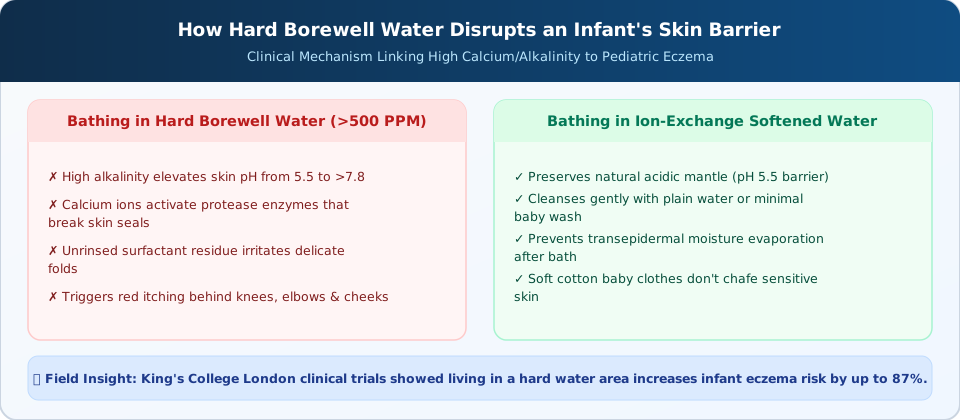
Why Infant Skin Is 5x More Vulnerable to Rajasthan's Borewell Water
An adult's outer skin layer (the stratum corneum) acts like a brick wall held together by lipid mortar, with a protective acidic pH around 4.7 to 5.5. A newborn or toddler's skin barrier is still developing—it is 30% thinner and loses moisture twice as fast.
When you fill a baby bath tub in Jaipur, Ajmer, or Sikar with warm geyser water drawn from a local borewell, that water typically has a hardness of 600 to 1,200 PPM and an alkaline pH of 7.8 to 8.4. Even if you use the most expensive ₹800 tear-free imported baby wash, two damaging reactions happen on your child's skin:
- pH Stripping & Enzyme Activation: Calcium and alkaline bicarbonates strip the baby's natural acid mantle, raising skin pH. Dermatological research (including landmark studies by King's College London and the University of Sheffield) shows that elevated skin pH over-activates natural enzymes called proteases, which prematurely break down the protein seals between skin cells.
- Micro-Abrasion from Stiff Baby Towels: Washing baby rompers, swaddles, and cotton towels in hard water locks rigid calcium crystals into the fabric weave. Drying a sensitive baby with a mineral-stiffened towel creates microscopic friction burns across the cheeks, neck folds, and elbows.
Practical Steps for Parents in Hard Water Apartments
If you live in a rented flat or high-rise society where you cannot immediately install a rooftop softener, here is how to protect your child's bath water today:
- For Infants Under 6 Months: Fill their small 15-liter baby bath tub using water from your kitchen drinking RO purifier, warmed slightly on the stove in a clean stainless steel vessel.
- For Growing Toddlers & Whole Family Protection: Install a compact washing-machine/bathroom inlet water softener inside your utility balcony or bathroom loft. Regenerated once a week with food-grade 99.7% pure salt tablets, it gives you unlimited warm soft water directly from your geyser and keeps all baby laundry fluffy and mineral-free.