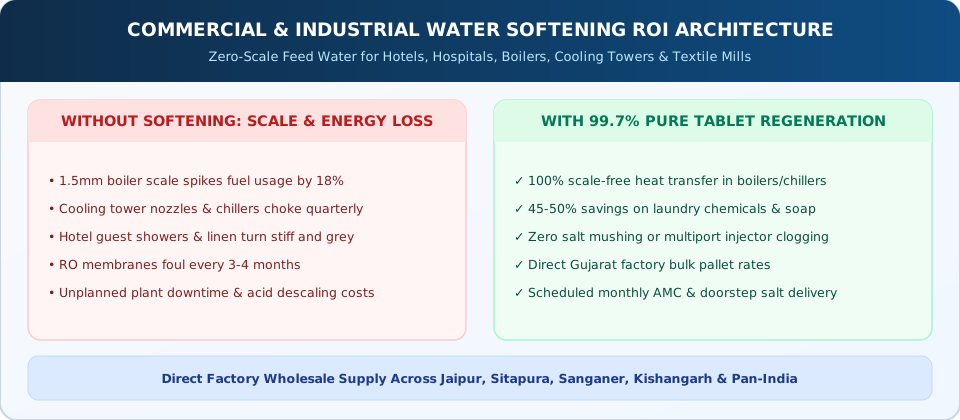
"In industrial steam boilers across Sitapura RIICO, Vishwakarma Industrial Area (VKI), Bhiwadi, and Bhilwara textile plants, a 1.5 mm layer of calcium sulfate or silica-magnesium scale on fire-tubes acts like a fiberglass blanket—cutting thermal transfer by 12–15% and driving flue-gas temperatures sky-high. Worse, localized hot spots on scaled boiler tubes soften the carbon steel until the tube blisters and ruptures under pressure."
The Mechanics of Boiler Scaling
Steam boilers generate steam by boiling large volumes of feed water. As the water evaporates into steam, the dissolved minerals (primarily calcium and magnesium) remain behind, rapidly concentrating within the boiler drum. This concentration process accelerates the precipitation of insoluble calcium carbonate, calcium sulfate, and silica, which deposit onto the combustion tubes and heat transfer surfaces.
Consequences of Scale in Steam Boilers
Even a thin layer of scale inside a boiler can lead to severe operational issues:
- Fuel Waste: Scale acts as a powerful thermal barrier. Its thermal conductivity is 100 to 200 times lower than that of steel. This poor heat transfer forces the burner to consume significantly more fuel to generate the same steam volume, raising operating costs.
- Tube Overheating & Rupture (Bulging): Because heat cannot escape from the metal tube walls into the water, the steel temperature rises rapidly, often exceeding the material's safety limits. The steel softens, bulges, and eventually ruptures under pressure, causing a catastrophic boiler explosion.
- Under-scale Corrosion: The scale layer traps highly alkaline chemicals and moisture against the boiler steel, leading to localized pitting corrosion and caustic embrittlement.
Boiler Water Pre-Treatment Standard
To ensure safe and efficient boiler operation, feed water must undergo thorough pre-treatment to maintain hardness close to zero PPM:
- Industrial Ion Exchange Softeners: Dual-bed or single-cylinder cation exchange systems are essential to remove calcium and magnesium ions before the water enters the feed tank.
- Deaeration: Thermal deaerators remove dissolved oxygen and carbon dioxide, preventing oxygen pitting and carbonic acid corrosion.
- Chemical Dosing: Phosphate compounds are dosed to precipitate trace hardness into non-sticky sludge, which can be safely discharged during routine bottom blowdown.
Anjani Traders supplies industrial-grade water softeners, premium cation exchange resin, and high-purity salt tablets for boilers across Jaipur. Contact us on WhatsApp for water analysis and customized treatment solutions.
Industrial Boiler Feed-Water Softening & Brine Purity Standards
According to industrial boiler feed-water guidelines (IS 10392 / ASME), low- and medium-pressure fire-tube and water-tube steam boilers require feed-water hardness to be maintained strictly below 1 to 5 PPM. When a factory softener in Sitapura or Bhiwadi is regenerated with low-grade unrefined crystal salt (which contains calcium sulfate impurities and 4% mud), the brine itself re-contaminates the resin bed—causing "hardness leakage" of 15–30 PPM right from the start of the cycle.
By standardizing on Crystal Clear 99.7% Pure Compacted Salt Tablets, industrial utility teams guarantee a clean 26.4% saturated sodium chloride brine draw, protecting boiler tubes, reducing blowdown heat losses, and cutting acid-descaling shutdowns.
Frequently Asked Questions
Request Softener Support
Connect with Anjani Traders on WhatsApp for prompt service, salt delivery, or expert advice in Jaipur.