"Appliance technicians servicing Bosch, LG, Samsung, and IFB front-load washing machines in Jaipur tell us that 90% of premature drum-bearing and heating-coil failures before year 4 are caused by raw borewell water. Worse, homeowners keep pouring double doses of ₹250/liter liquid detergent because they don't see foam in the drum window—not realizing the calcium in the water is turning half that detergent into grey sludge plastered behind the stainless steel drum."
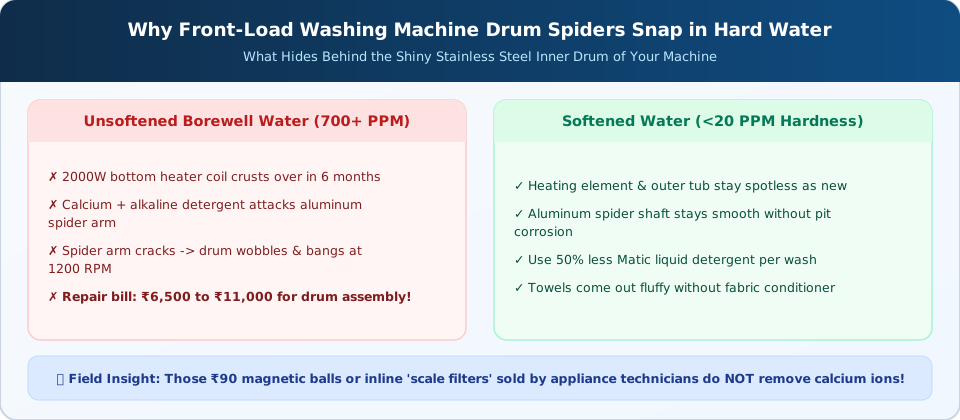
Scaling on the Heating Element
Modern front-load and top-load washing machines feature internal heating coils to heat water for hot wash cycles, which are essential for removing tough stains and sanitizing clothes. When hard water is heated, dissolved calcium bicarbonate undergoes thermal decomposition, precipitating as calcium carbonate (limescale) directly onto the heating element.
Because limescale has poor thermal conductivity, it acts as an insulating barrier. The heating element must work harder and run longer to heat the water, drastically increasing electricity usage. Eventually, the element overheats under the scale layer and burns out, requiring a costly repair. This is a common issue in Jaipur areas like Jagatpura and Malviya Nagar, where groundwater hardness is high.
Detergent Waste and Chemical Binding
Hard water minerals react with liquid and powder detergents, neutralizing their active surfactants. Rather than forming cleansing bubbles (micelles) to lift dirt from fabrics, the detergent molecules bind to the calcium and magnesium, precipitating out of the water as sticky scum. To achieve clean clothes in hard water, you must use two to three times the recommended amount of detergent, which significantly increases monthly expenses.
Damage to Fabrics and Clothes
The mineral precipitates and soap scum do not rinse away completely; they attach to the fabric fibers during the wash cycle. This leads to several textile issues:
- Fabric Stiffness: Clothes, particularly towels and bedsheets, feel stiff, scratchy, and abrasive against the skin.
- Discoloration: White clothes turn a dingy grey or yellowish shade, and colored fabrics lose their brightness and look faded after only a few washes.
- Reduced Fabric Lifespan: The abrasive mineral crystals trapped within the fibers rub against each other during movement, weakening the threads and causing clothes to tear up to 40% faster.
Protecting Your Washing Machine
While chemical descalers or washing machine powders offer temporary relief, they must be used regularly and do not protect the fabrics during the wash. The most effective solution is to install a dedicated inline washing machine softener or a whole-house water softening system. By removing the hardness minerals at the inlet, your machine will run efficiently, detergents will foam instantly, and your laundry will stay bright, clean, and soft.
Anjani Traders supplies premium whole-house and point-of-use water softeners across Jaipur. Contact us today on WhatsApp to protect your home appliances.
Protecting Front-Load Spider Arms, Inlet Solenoids & Fabrics
When unsoftened borewell water (600–1,300 PPM) enters your washing machine, three hidden failure mechanisms start ticking:
- Aluminum Drum Spider Corrosion: As explained in our Front-Load Washing Machine Spider Drum Corrosion Guide, alkaline calcium scale and undissolved detergent cake onto the hidden die-cast aluminum tri-arm shaft at the back of the steel drum until it snaps under a 1,200 RPM spin cycle.
- Internal Heater Coil Scaling: Front-load wash cycles at 40°C–60°C bake a 3mm limestone crust onto the bottom heater element.
- Fabric Dinginess & Stiff Towels: Calcium soap curd traps dirt fibers inside cotton weave, turning white shirts greyish-yellow and making bath towels scratchy.
Feeding your laundry line from a whole-house water softener running on 99.7% pure compacted salt tablets (₹500 / 25kg bag) cuts your liquid detergent bill by 50% and doubles the life of your washing machine.
Frequently Asked Questions
Request Softener Support
Connect with Anjani Traders on WhatsApp for prompt service, salt delivery, or expert advice in Jaipur.