"Rajasthan gets 320+ sunny days a year, making rooftop solar water heaters (Racold, Supreme, V-Guard, Tata Power) hugely popular across Jaipur, Ajmer, and Jodhpur. Yet every November, right when winter starts, homeowners discover their 200-liter solar heater is barely giving lukewarm water. When our technician pulls out a single glass vacuum tube, it weighs 4 kg heavier than normal—packed solid to the middle with white calcium stone baked during the May summer!"
The Rajasthan Summer Trap for Rooftop Solar Water Heaters
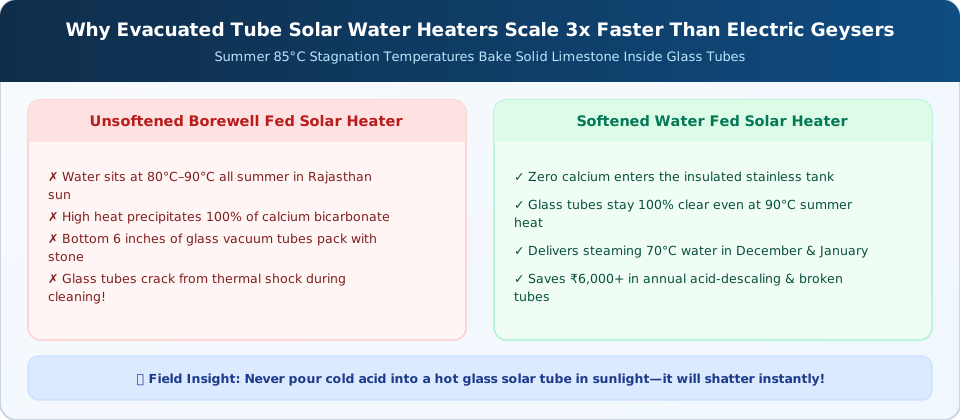
An electric bathroom geyser is switched off from April to October. A rooftop Evacuated Tube Collector (ETC) Solar Water Heater, however, sits under the blazing 45°C Rajasthan sun 365 days a year. During May, June, and July, nobody uses hot water for bathing—so the 200 liters of borewell water inside the solar tank boils at 85°C to 95°C every single afternoon.
In water chemistry, calcium carbonate has retrograde solubility: the hotter the water gets, the less calcium it can hold. At 85°C, nearly every milligram of temporary hardness turns into solid white gravel and slides down to the closed bottom tip of the slanted glass vacuum tubes. By the time winter arrives in November, the thermosiphon circulation inside the tubes is choked dead.
Why Cleaning Scaled Glass Solar Tubes Is So Risky
Unlike a heavy copper geyser coil, solar heater tubes are made of thin double-walled borosilicate glass with a vacuum in between, sealed into the main tank by fragile silicone rubber rings. Every time a local plumber pulls out 20 glass tubes to poke out hard scale with an iron rod and acid, 2 or 3 brittle tubes crack, and the disturbed silicone gaskets start leaking water onto your roof.
The Permanent Fix: Feed Your Solar Heater from Your Softener Line
If you already have a rooftop water softener—or are installing a new solar heater—make sure the cold water inlet feeding the solar tank is tapped after your water softener (not from the raw borewell tank!). When fed softened water regenerated with 99.7% pure salt tablets, even 95°C summer stagnation produces zero limestone scale inside the glass tubes, keeping your solar heater running at 100% thermal efficiency for 15+ years.