"A homeowner in Bani Park called us on a Monday morning saying his morning brush water tasted like ocean water right after he manually regenerated his softener on Sunday night. When we asked how long he ran the 'Rinse' mode, he said: 'Two minutes—I was in a hurry to watch the cricket match!' Because a 100-liter vessel holds 15 kg of concentrated salt brine during regeneration, cutting the Rinse cycle short leaves salty brine sitting right in the vessel."
First Rule: Softened Water Should Never Taste Like Salt
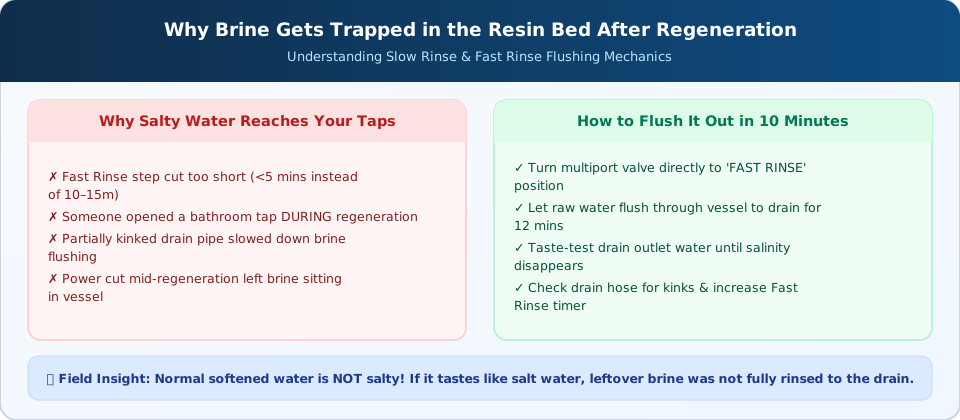
Let's clear up a common myth first: while a water softener uses 25kg bags of salt tablets to regenerate its resin beads, normal softened water does not taste salty. Once the sodium ions lock onto the resin beads and push calcium off, 100% of the excess salt brine is supposed to be washed out through the waste drain pipe before the valve switches back to your home's pipeline.
If you turn on your bathroom tap after regeneration and get a mouthful of salty water, concentrated brine was left trapped inside the blue FRP cylinder.
The 4 Reasons Brine Fails to Flush Out
- Power Cut or Overhead Tank Ran Empty Mid-Cycle: If your automatic softener started regenerating at 2:00 AM, sucked in 40 liters of heavy salt brine, and then your overhead raw water tank ran empty (or power tripped the booster pump), there was no fresh water pressure left to flush the brine out to the drain! When the pump came back on in the morning, that trapped brine went straight into your bathroom pipes.
- Shortened Slow Rinse / Fast Rinse Duration: After sucking all the liquid brine out of the drum (which takes ~15 minutes), the valve must stay in Slow Rinse for another 15–20 minutes, followed by Fast Rinse for 10–12 minutes. If someone manually switches from Brine Draw straight to Service after 15 minutes, half the brine is still inside the vessel.
- Kinked or Restricted Drain Pipe: If a heavy flowerpot was placed on the flexible drain hose on your terrace, the rinse water cannot exit fast enough to clear the vessel within the programmed 10-minute timer window.
- Too Much Salt Water Added to a Small Vessel: If the Brine Refill timer on an automatic valve is accidentally set to 20 minutes instead of 6 minutes, the brine tank fills to the brim and floods the vessel with double the brine volume that a standard rinse cycle can clear.
How to Fix Salty Tap Water Right Now
You do not need to waste a new bag of salt! Simply walk up to your softener, put the multiport valve into "FAST RINSE" mode for 12 to 15 minutes while ensuring your inlet pump is running, then return it to "SERVICE". Open the nearest bathroom tap for 2 minutes to clear the house pipe, and your water will be crisp, soft, and salt-free.