"In 8 out of 10 service calls our Jaipur technicians attend in Mansarovar, Vaishali Nagar, and Malviya Nagar where a homeowner complains that 'my softener stopped softening water,' the machine itself is not broken. Either the brine tank was choked with ₹150 unrefined crystal salt mud, the tank was overfilled to the brim causing a hollow salt bridge, or the digital multiport valve lost its time setting after a power cut and was regenerating at 2:00 PM instead of 2:00 AM."
Top 10 Softener Pitfalls
If your water softener isn't working as expected or requires frequent repairs, you might be making one of these common mistakes. Understanding these pitfalls will help you keep your system running efficiently for years:
- Using Cheap Raw Salt: Raw crystal salt contains dirt, sand, and sulfates that clog the control valve's injectors and form a muddy sludge at the bottom of the brine tank. Always use 99.7% pure compacted salt tablets.
- Letting the Salt Level Drop to Zero: If the brine tank runs out of salt, the system will regenerate with plain water. This leaves the resin bed saturated with calcium and magnesium, allowing hard water to enter your home.
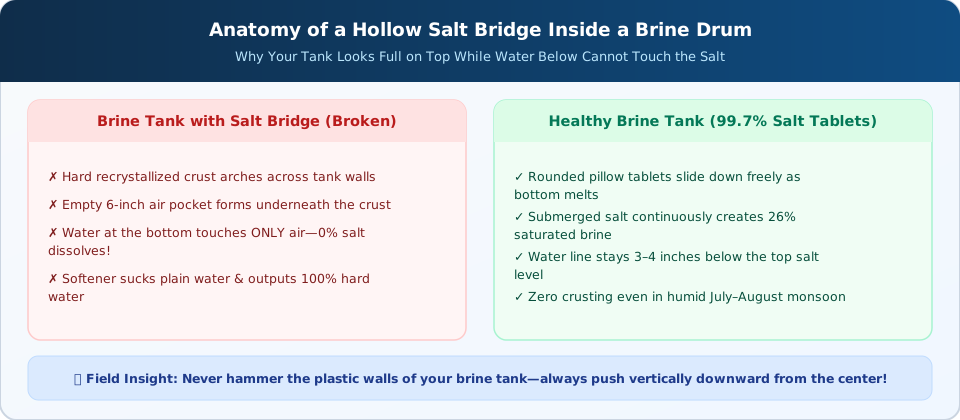
- Overfilling the Brine Tank: Filling the tank to the absolute top can lead to moisture absorption, causing the salt to stick together and form a hard crust (salt bridge) that prevents it from dissolving.
- Setting Incorrect Regeneration Frequencies: Sizing your regeneration schedule correctly is crucial. Setting it too far apart leads to hard water leakage, while regenerating too frequently wastes salt and water.
- Leaving the Bypass Valve Open: The bypass valve allows water to flow around the softener during maintenance. If left open, untreated hard water will bypass the system and enter your taps.
- Ignoring Resin Fouling: Standard salt regeneration cannot flush out iron and organic slime. Use a liquid resin cleaner once or twice a year to sanitize and rejuvenate the resin beads.
- Buying an Undersized System: Sizing a softener based solely on price can result in a system that cannot handle your daily water usage, leading to premature resin failure.
- Forgetting to Clean the Brine Tank: Accumulating silt and sediment at the bottom of the brine tank can block the brine draw tube. Clean the tank once a year to ensure proper suction.
- Low Backwash Water Pressure: The system requires adequate water pressure during backwash to expand the resin bed and flush out dirt. Ensure your booster pump is active during the regeneration cycle.
- Ignoring Minor Leaks: Small leaks around the control valve or bypass joints can worsen over time, leading to water damage and reduced system pressure. Address leaks immediately.
Avoiding these mistakes will keep your water softener running at peak efficiency, protecting your home and saving you money. For expert troubleshooting, maintenance, or high-purity salt tablet delivery in Jaipur, contact Anjani Traders on WhatsApp today.
Field Checklist: How to Avoid Costly Softener Breakdowns in Jaipur
Operating a whole-house water softener in Rajasthan's high-hardness climate (500 to 1,500+ PPM) is effortless if you avoid three mechanical pitfalls:
- Mistake #1: Leaving the Pre-Filter Cartridge Unchanged for 6+ Months: Borewell sand and fine silt bypass a choked 20-inch spun filter and coat the top of your cation resin bed, blocking ion exchange. Inspect your pre-filter every 60–90 days.
- Mistake #2: Mixing Loose Crystal Salt with Salt Tablets: Dumping loose crystal salt on top of compacted salt tablets cements the inter-tablet gaps, halting water circulation and starving the venturi injector of saturated brine.
- Mistake #3: Guessing Your Regeneration Frequency: Use our Water Softener Size Calculator and Salt Consumption Calculator to match your exact borewell PPM to your family's daily liter usage.
Frequently Asked Questions
Request Softener Support
Connect with Anjani Traders on WhatsApp for prompt service, salt delivery, or expert advice in Jaipur.