"When homeowners see the golden-amber beads inside a water softener cylinder for the first time, many think it is sand or plastic filter media that just traps dirt. In reality, those 0.5mm food-grade polystyrene divinylbenzene (DVB) beads are microscopic chemical batteries negatively charged with sulfonate sites—capable of performing thousands of calcium-for-sodium swaps over an 8-to-10-year lifespan if fed clean 99.7% pure salt tablets."
What is Cation Resin?
Cation exchange resin consists of spherical plastic beads made from a copolymer of polystyrene and divinylbenzene (DVB). During manufacturing, the beads undergo acid treatment to attach negatively charged chemical groups (usually sulfonic acid, SO₃⁻) to their molecular matrix. These sulfonic groups attract and hold positively charged ions (cations) like sodium (Na⁺) and hardness minerals (Ca²⁺ and Mg²⁺).
Cross-Linking Percentages: 8% vs. 10%
The durability and lifespan of resin beads depend on their divinylbenzene content, known as the cross-linking percentage. This cross-linking acts as a chemical binder, holding the polystyrene chains together.
- 8% Cross-Linked Resin: The industry standard for residential water softeners. It offers excellent exchange capacity, fast kinetics, and a typical lifespan of 5 to 10 years in municipal water with low chlorine levels.
- 10% Cross-Linked Resin: A premium, heavy-duty resin featuring tighter molecular bounds. It is highly resistant to chemical oxidation from chlorine (which damages resin structure) and physical breakdown, making it the ideal choice for chlorinated municipal water or industrial systems.
Resin Fouling and Degradation
Over time, resin beads lose their ability to exchange ions due to physical wear and chemical contamination. The primary causes of resin degradation include:
- Chlorine Damage: Chlorine oxidizing agents break down the DVB cross-links, causing the beads to swell, turn mushy, and lose their physical strength. This leads to high pressure drop and loss of capacity.
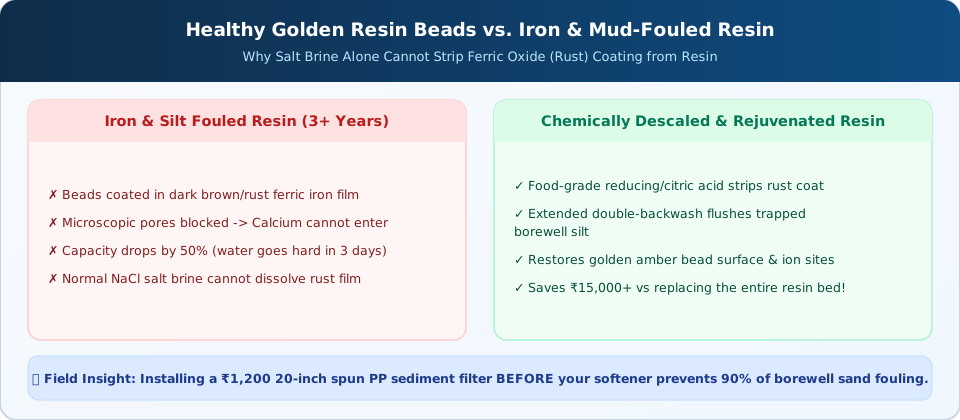
- Iron & Manganese Fouling: Dissolved iron (Fe²⁺) oxidized within the resin cylinder deposits on the bead surface, creating a physical barrier that prevents calcium and magnesium from reaching the exchange sites.
- Silt and Organic Fouling: Suspended silt, sand, and organic matter from borewell water can coat the resin bed, clogging the system and reducing water pressure.
Maintaining Your Resin
To maximize your resin's lifespan, perform regular backwashing to flush out accumulated silt. For systems running on water containing iron or organic impurities, use a liquid resin restorer (acidic cleaner) once or twice a year to strip metals off the beads during regeneration. Using premium, highly refined compacted salt tablets also prevents silt from entering the resin bed from the brine tank.
For professional resin diagnostic testing, cleaning, or complete resin replacement, contact Anjani Traders. We supply premium-grade 8% and 10% cross-linked cation resin across Jaipur.
How to Make Your Cation Resin Bed Last 10+ Years in Rajasthan
Replacing 50 to 100 liters of food-grade Strong Acid Cation (SAC) resin (such as INDION 225 Na or Tulsion T-42 Na) costs ₹6,000 to ₹14,000. In Rajasthan's borewell conditions, three enemies destroy resin prematurely—and all three are 100% preventable:
- Mud & Silt Coating from Cheap Crystal Salt: Using unrefined crystal salt dumps fine clay into the brine draw, which coats the microscopic pores of the resin beads. Always use 99.7% pure compacted salt tablets (₹500 / 25kg bag) with <0.01% insolubles.
- Ferric Iron Fouling: If your tube-well has dissolved iron, it oxidizes into rust inside the resin bed (see how to clean iron-fouled yellow cation resin).
- Free Chlorine Oxidation: If you mix highly chlorinated municipal tanker water with borewell water, place an activated carbon filter ahead of the softener so chlorine doesn't break the resin's 8% DVB cross-linking.
Frequently Asked Questions
Request Softener Support
Connect with Anjani Traders on WhatsApp for prompt service, salt delivery, or expert advice in Jaipur.