"Whenever families relocate from Bisalpur-supplied colonies or out-of-state cities into high-borewell pockets like Jagatpura, Vaishali Nagar West, or Kota hostels, hair fall is the very first symptom they notice within 3 weeks. Dermatologists across Jaipur routinely advise patients to test their bathroom tap hardness before spending thousands on hair serums—because no shampoo can penetrate a hair shaft coated in insoluble calcium stearate."
How Minerals Attach to Hair
Hair strands carry a naturally negative electrical charge, while dissolved hard water minerals like calcium (Ca²⁺) and magnesium (Mg²⁺) are positively charged cations. When you wash your hair, these minerals are electrostatically attracted to the hair shafts, creating a persistent, microscopic mineral film. This film acts as an impermeable barrier, locking out moisture, conditioners, and natural sebum from penetrating the hair cortex.
Over time, this lack of hydration makes the hair extremely dry, stiff, and brittle. When you comb or style your hair, it lacks elasticity and snaps easily, leading to significant hair breakage (often mistaken for hormonal hair fall).
Effects on Scalp Health and Follicles
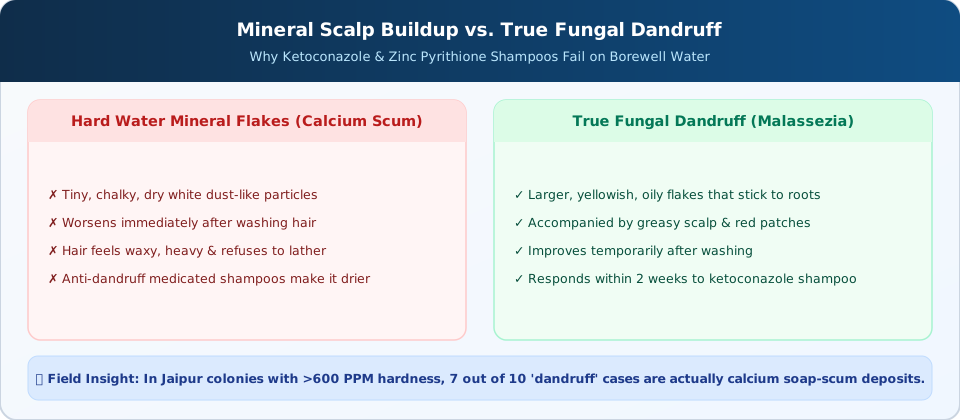
In addition to damaging the hair shaft, hard water minerals react with shampoo surfactants to form soap scum (calcium stearate). This sticky residue accumulates on the scalp, clogging hair follicles and preventing healthy sebum circulation. This blockage leads to several complications:
- Scalp Flaking and Dandruff: The mineral layer dries out the scalp, causing irritation, itching, and scaling.
- Weakened Roots: Clogged follicles suffocate the hair roots, reducing the supply of vital nutrients and causing hair to enter the shedding phase prematurely.
- Frizz and Dullness: Hard water raises the hair cuticles (the outer shingles of the hair shaft), exposing the cortex. This causes extreme frizz, tangling, and a total loss of natural shine.
Comparing Hair in Hard vs. Soft Water
| Hair Attribute | Washed in Hard Water | Washed in Soft Water |
|---|---|---|
| Cuticle Structure | Raised, rough, mineral-coated | Flat, smooth, aligned |
| Moisture Levels | Dry, dehydrated cortex | Hydrated, elastic |
| Lather & Cleansing | Weak lather, leaves soap scum | Rich lather, rinses completely clean |
| Breakage Rate | High due to brittleness | Low (Flexible hair shafts) |
Permanent Solutions for Hair Fall
Clarifying shampoos or acidic rinses (like apple cider vinegar) can temporarily strip away mineral scale, but they also dry out the hair if used too frequently. The only permanent solution is to eliminate the minerals from the water supply itself. Installing a whole-house water softener or a dedicated shower filter ensures that every bath is with soft water. Soft water allows your scalp to breathe, preserves natural oils, and keeps your hair strong, hydrated, and shiny.
Protect your hair from the harsh groundwater of Jaipur. Contact Anjani Traders today to find the perfect water softening solution for your home.
Why Expensive Shampoos Fail in 600+ PPM Jaipur Borewell Water
When you wash your hair in raw borewell water in Jagatpura (900–1,600 PPM), Mansarovar (700–1,200 PPM), or Kota coaching hostels, dissolved calcium (Ca2+) and magnesium (Mg2+) ions chemically bind to the anionic surfactants in your shampoo. Instead of rinsing cleanly down the drain, they form a microscopic wax-like layer of hard-water scalp buildup.
Installing a whole-house cation water softener regenerated with 99.7% pure compacted salt tablets (₹500 / 25kg bag) removes 99% of calcium and magnesium before the water ever reaches your geyser or showerhead. Within 14 days of switching to softened bath water, hair cuticles lie flat again, shampoo lathers at half the dose, and mechanical hair breakage drops dramatically.
Frequently Asked Questions
Request Softener Support
Connect with Anjani Traders on WhatsApp for prompt service, salt delivery, or expert advice in Jaipur.