"Every November and December when Jaipur's winter kicks in, electrical appliance repair shops in Mansarovar, Vaishali Nagar, and Malviya Nagar pile up ratusan burnt copper geyser heating elements. When we weigh an old 25-liter storage geyser removed from a house in Jagatpura after 2 years on raw borewell water, the tank is often 4 to 6 kg heavier than when it was new—packed solid with broken chunks of white calcium carbonate rock."
The Vulnerability of Geysers
Electric geysers (water heaters) are particularly vulnerable to hard water damage because they heat water directly using a high-wattage copper or glass-coated heating element. When groundwater containing dissolved calcium bicarbonate is heated, the thermal breakdown causes insoluble calcium carbonate (limescale) to precipitate. This precipitate settles directly onto the hottest surface available: the geyser's heating element.
The Physics of Element Burnout
Limescale is an excellent thermal insulator. When a layer of scale coats the geyser's heating element, it blocks heat from transferring efficiently into the surrounding water. This causes several severe issues:
- High Electricity Consumption: The geyser must run significantly longer to heat the water to the set temperature, inflating your monthly electricity bills. Just 3 mm of scale can increase energy usage by up to 20%.
- Overheating and Failure: Because heat cannot escape from the element casing, the internal temperature of the element skyrockets. This extreme thermal stress causes the metal casing to warp, split, and burn out, often causing an electrical short circuit.
- Inner Tank Corrosion: The mineral scale traps moisture and acidic deposits against the geyser's inner steel tank, accelerating corrosion and leading to pinhole leaks that require a complete unit replacement.
Limescale Thickness vs. Heating Efficiency Loss
| Scale Thickness (mm) | Approximate Energy Waste (%) | Average Time to Element Burnout |
|---|---|---|
| 1.0 mm | 7% - 10% | 12 - 18 months |
| 2.0 mm | 12% - 15% | 8 - 12 months |
| 3.0 mm | 18% - 22% | 6 - 8 months |
| 5.0+ mm | 30%+ | Less than 6 months |
Preventive Measures
Replacing geyser elements every few months is expensive and frustrating. While inline antiscalant cartridges can reduce scaling slightly, they must be replaced frequently and do not remove the minerals. Installing a whole-house water softener at your main water tank outlet is the only comprehensive solution. By replacing calcium and magnesium with sodium, it prevents limescale formation throughout your plumbing, protecting your geysers, saving electricity, and ensuring soft water at every tap.
Protect your home appliances from Jaipur's hard water. Contact Anjani Traders today to get a quote for a water softener installation.
How Much Extra Electricity a Scaled Geyser Costs You in Jaipur
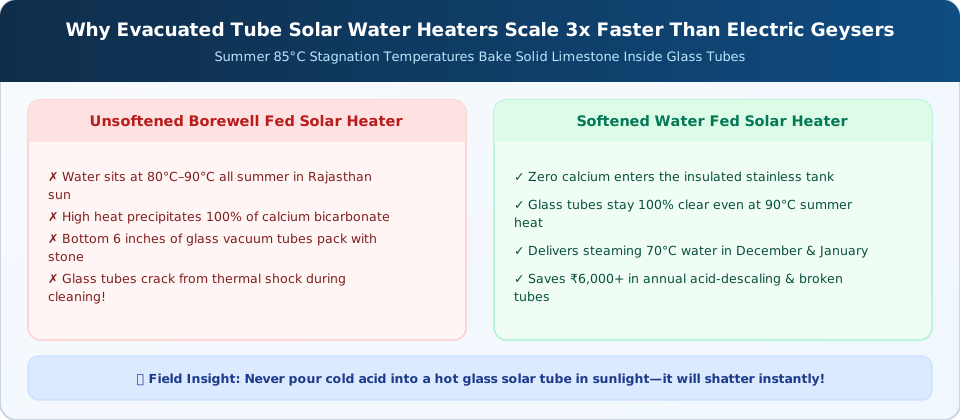
Inside a storage electric geyser (Racold, AO Smith, Havells, Bajaj) or a rooftop solar water heater, the copper or Incoloy heating element reaches surface temperatures above 85°C. At this temperature, dissolved calcium bicarbonate in Jaipur's 600–1,200 PPM borewell water rapidly decomposes into rock-hard calcite crust right on the coil.
As shown in our ₹15,800 Annual Hard Water Cost Breakdown, a scaled geyser takes 35–45 minutes to heat water instead of 15 minutes—adding ₹3,200+ to your winter electricity bill before the trapped heat snaps the thermostat and bursts the coil. Feeding your bathrooms with water softened using 99.7% pure salt tablets (₹500 / 25kg bag) keeps geyser tanks spotless for 10+ years and prevents hot-water outlet pipe choking.
Frequently Asked Questions
Request Softener Support
Connect with Anjani Traders on WhatsApp for prompt service, salt delivery, or expert advice in Jaipur.