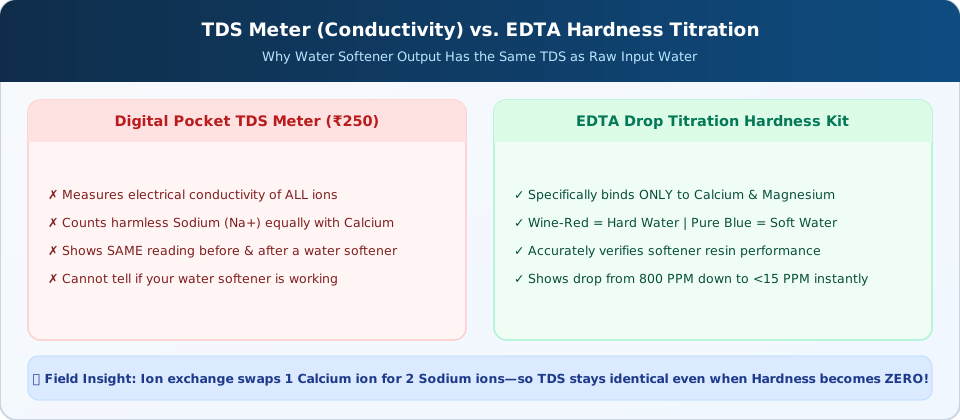
"At least three times a week, a worried homeowner in Jaipur calls our helpline saying: 'Bhaiya, we just regenerated our softener with salt tablets, but my digital TDS pen still shows 920 PPM! The machine isn't working!' When our technician visits with a chemical drop-test kit, the water turns royal blue on the very first drop—proving the water is 100% soft."
The Great TDS Meter Misunderstanding
Walk into almost any apartment society in Rajasthan and you will see residents testing their bathroom tap water with a pocket digital TDS meter bought online for ₹250. When a homeowner installs a whole-house water softener, the very first thing they do is dip that digital pen into a glass of softened water. And when the screen still reads 850 PPM—the exact same number as the raw borewell water—panic sets in.
Did the plumber install a fake system? Are the resin beads dead? No. Your softener is doing its exact job. The problem is that a TDS meter cannot measure water hardness.
What happens inside the Resin Vessel (The Ion Swap)
Let's look at the actual chemistry without textbook jargon. TDS (Total Dissolved Solids) is the total weight of every mineral dissolved in water—calcium, magnesium, sodium, potassium, bicarbonates, and chlorides. A pocket TDS meter doesn't actually weigh anything; it sends a tiny electrical current between two metal prongs and measures how fast electricity travels through the water.
A water softener does not filter out total dissolved solids like an RO membrane. Instead, its resin beads perform an ion exchange swap:
- The resin grabs 1 Calcium ion (Ca2+) (which causes rock-hard scale in geysers and ruins hair).
- In exchange, the resin releases 2 Sodium ions (2Na+) into the water (originating from your water softener salt tablets).
- Because those two sodium ions conduct electricity just like the one calcium ion did, your digital TDS meter sees the exact same electrical conductivity!
TDS vs. Total Hardness: Quick Comparison
| Parameter | Total Dissolved Solids (TDS) | Total Water Hardness |
|---|---|---|
| What It Measures | All salts & minerals (Sodium, Calcium, Potassium, etc.) | Strictly scale-forming Calcium (Ca2+) & Magnesium (Mg2+) |
| Correct Testing Tool | Digital Conductivity Pen (TDS Meter) | EDTA Liquid Titration Drop Test Kit |
| Causes Geyser & Tap Scale? | No (Sodium TDS never forms limescale) | Yes (100% responsible for white crust) |
| Machine That Reduces It | Reverse Osmosis (Kitchen RO Purifier) | Cation-Exchange Water Softener |
How to Properly Test If Your Water Softener Needs Regeneration
Put the digital TDS pen back in your kitchen drawer—save it for testing your drinking water RO membrane. To test your bathroom or whole-house water softener, either book an on-site EDTA Water Hardness Test with our Jaipur team or keep a ₹350 Total Hardness drop kit next to your brine tank. If the water sample turns pink/red when indicator drops are added, it is time to check your brine tank salt level and run a regeneration cycle.