"Many homeowners think regeneration is just 'washing the filter with water.' In reality, regeneration is a precise 5-stage chemical reversal: first lifting and unpacking the resin bed (Backwash), then slowly pulling concentrated 26% salt brine through the beads for 30–40 minutes to kick off the trapped calcium (Brine & Slow Rinse), then packing the bed and flushing out salty taste (Fast Rinse), and finally refilling the salt drum for next week."
Why Regeneration is Necessary
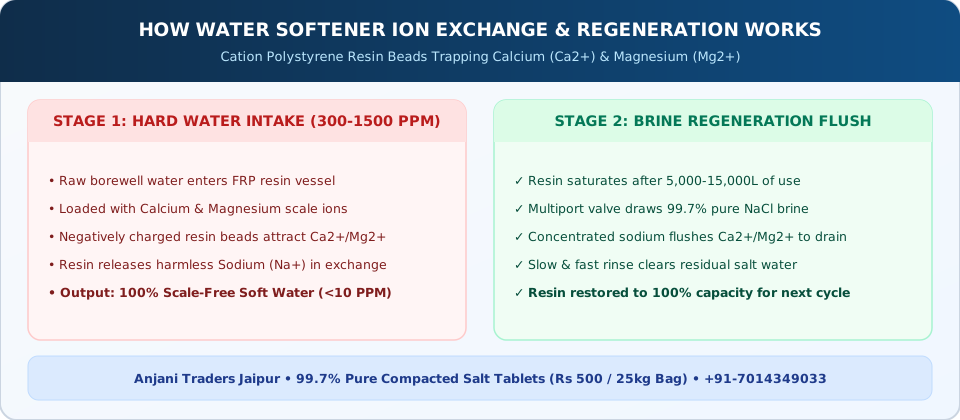
As hard water passes through a water softener, the cation exchange resin beads capture calcium and magnesium ions, releasing sodium. Eventually, all the active exchange sites on the resin beads become saturated with hardness minerals. At this point, the system experiences "hardness breakthrough" and can no longer soften water. To restore its capacity, the system must undergo regeneration, where the hardness minerals are flushed down the drain and the resin is recharged with sodium.
The Four Stages of Regeneration
Whether you run a manual multiport valve or a fully automatic system, regeneration consists of four distinct phases:
- Stage 1: Backwash (10-15 minutes): The control valve reverses the water flow, sending water from the bottom of the tank upward. This expands the compacted resin bed, flushing out dirt, silt, organic matter, and fractured resin beads through the drain line.
- Stage 2: Brine Draw & Slow Rinse (40-60 minutes): The control valve uses a venturi nozzle (injector) to draw a highly concentrated saltwater solution (brine) from the salt tank. As this brine flows slowly through the resin bed, the high concentration of sodium ions forces the calcium and magnesium off the beads. The hardness-laden wastewater is routed out through the drain.
- Stage 3: Fast Rinse (10 minutes): Water flows in the normal direction (downward) to compact the resin bed and flush out any remaining salt water. This step ensures that no salty water enters your household taps.
- Stage 4: Brine Refill: The control valve directs fresh water back into the brine tank. This water dissolves the salt tablets to form saturated brine for the next scheduled regeneration cycle.
Types of Regeneration Control
Different softeners utilize different mechanisms to determine when to trigger regeneration:
- Time-Clock Regeneration: The system is programmed to regenerate at a fixed time interval (e.g., every 3 days at 2:00 AM), regardless of actual water usage. This can lead to wasted salt and water if usage is low.
- Metered (Demand-Initiated) Regeneration: The control valve features a built-in turbine flow meter that tracks water consumption. It initiates regeneration only when the resin's capacity is near exhaustion, making it highly efficient.
- Manual Multiport Valve: Commonly used in low-cost installations. The user must manually rotate a handle through the BACKWASH, BRINE SUCTION, RINSE, and SERVICE positions, keeping track of the schedule themselves.
Anjani Traders offers expert maintenance, multiport valve replacement, and automation services for residential and commercial water softeners in Jaipur. Contact us on WhatsApp for assistance.
Exact Salt Dosage & Brine Contact Time for 100% Resin Recovery
To get a full week of soft water in Jaipur without salty-tasting tap water or premature hardness breakthrough, two numbers govern your regeneration cycle:
- 120g to 150g of Pure NaCl per Liter of Resin: A 50-liter resin vessel requires roughly 6.0 to 7.5 kg of salt dissolved in ~22–28 liters of water per regeneration. Calculate your exact plant math using our Salt Consumption Calculator.
- Why Purity Dictates Regeneration Efficiency: If your brine tank contains mud or undissolved lumps from cheap crystal salt, the brine concentration drops from 26% to 14%, leaving 40% of the resin beads still stuck with calcium! Using Crystal Clear 99.7% Pure Compacted Salt Tablets (₹500 / 25kg bag) guarantees full saturation every cycle.
Frequently Asked Questions
Request Softener Support
Connect with Anjani Traders on WhatsApp for prompt service, salt delivery, or expert advice in Jaipur.