"Take a bar of soap or a cap of liquid detergent in Bisalpur soft water (140 PPM) and it explodes into thick, creamy foam in 5 seconds. Take that exact same soap into a bathroom on 950 PPM borewell water in Jagatpura or Mansarovar, and the water turns cloudy grey with zero bubbles until you use three times as much soap. That cloudy grey curd is literally your soap money turning into insoluble limestone wax."
The Chemical Reaction of Soap
To understand why soap fails to lather in hard water, we must look at how soap is made. Traditional soaps are sodium or potassium salts of fatty acids (such as sodium stearate). When soap is mixed with soft, mineral-free water, it dissolves easily. The soap molecules form spherical structures called micelles, which trap dirt and oils, allowing them to be easily rinsed away with water, creating a rich, thick lather in the process.
However, when soap is introduced to hard water, a rapid chemical reaction occurs. The divalent calcium (Ca²⁺) and magnesium (Mg²⁺) cations in the hard water immediately react with the dissolved sodium fatty acid molecules. The calcium and magnesium ions displace the sodium, forming an insoluble precipitate:
This precipitate, known chemically as calcium stearate, is the sticky, greyish-white substance commonly referred to as soap scum. Because the soap molecules are bound to the calcium and magnesium, they cannot form the micelles necessary to cleanse or lather.
The Consequences of Soap Scum
The formation of soap scum has several negative impacts on your home and personal care:
- Wasted Detergent and Soap: You must add massive amounts of soap or shampoo just to consume all the dissolved calcium and magnesium ions in the water. Only after all the hardness minerals have precipitated as soap scum can the remaining free soap molecules begin to lather and clean. This wastes up to 60% of your cleaning supplies.
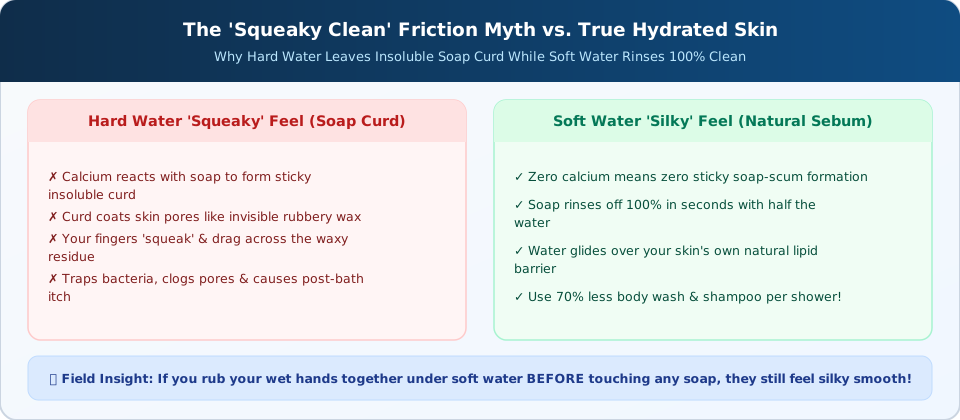
- Skin and Scalp Irritation: Soap scum does not rinse off easily. It leaves a microscopic, sticky coating on your skin and hair, stripping away natural oils. This leads to dry skin, clogged pores, dandruff, and severe hair breakage.
- Dingy, Stiff Clothes: In washing machines, soap scum attaches to the fabric fibers, trapping dirt. Over time, white clothes turn grey or yellow, and towels become stiff and scratchy.
- Bathroom Grime: Soap scum accumulates on bathroom tiles, acrylic tubs, and shower screens, forming a stubborn layer that attracts mold and mildew.
How to Solve the Lathering Problem
Modern synthetic detergents (shampoos and liquid detergents) use synthetic surfactants that are chemically formulated to be more resistant to hard water than soap bars. However, while they lather slightly better, they still lose a large portion of their cleaning power to mineral binding.
The only permanent solution is to remove the calcium and magnesium ions at the water inlet of your home using an ion exchange water softener. Once softened, the water contains only harmless sodium ions, allowing soaps to dissolve instantly and produce a rich lather with a fraction of the product, leaving your skin clean and your hair soft.
Anjani Traders provides complete domestic and commercial water softeners across Jaipur. Contact us today for a free consultation and enjoy the benefits of clean, soft water.
How Hard Water Doubles Your Household Soap, Shampoo & Detergent Bill
Every soap, body wash, shampoo, and laundry detergent molecule has a water-loving head (typically a sodium or potassium carboxylate/sulfonate salt) and an oil-grabbing tail. When soap hits raw hard water containing Calcium (Ca2+) and Magnesium (Mg2+), a chemical hijacking occurs before a single bubble can form:
Your soap is forced to act as an expensive chemical water softener first! Every gram of calcium in your bucket neutralizes several grams of soap into sticky, grey-white calcium stearate (soap scum). Only after you have poured enough extra shampoo or detergent to bind all the calcium in the water does the remaining soap finally start lathering. As documented in our ₹15,800/Year Hard Water Audit and DIY 30-Second Soap Foam Test, switching to water softened with 99.7% pure compacted salt tablets (₹500 / 25kg bag) slashes household soap, shampoo, and laundry detergent consumption by 50% to 65% overnight.
Frequently Asked Questions
Request Softener Support
Connect with Anjani Traders on WhatsApp for prompt service, salt delivery, or expert advice in Jaipur.